Picking up a small fastener, opening a bag and carrying outdoor equipment all ask something different of your hands. That is why choosing between full-finger and half-finger tactical gloves is more useful when you start with the task instead of the look.
The two styles differ most obviously at the fingertips. The right decision also depends on the palm, wrist closure, materials and fit of the particular glove.
Quick answer: decide what your fingertips need to do
Full-finger gloves cover the fingertips. Half-finger gloves leave them exposed for direct contact with objects. If your tasks involve both small-item handling and repeated contact with rough surfaces, write down which happens most often and where you need coverage.
Neither style alone establishes a tested protection level. Any required cut, impact or other workplace protection must come from the specific product's documented rating and your task requirements.
Compare coverage and everyday usability
|
Question |
Full-finger style |
Half-finger style |
|
Are the fingertips covered? |
Yes |
No |
|
Can bare fingertips contact a small object? |
Only after removing the glove |
Yes |
|
How should phone use be checked? |
Look for stated touchscreen compatibility and try your device |
Exposed fingertips allow direct screen contact |
|
What determines palm grip? |
The individual palm material and construction |
The individual palm material and construction |
Test the tasks you repeat
For general outdoor handling, make a short list of ordinary movements: open a zipper, pick up a small object, close a buckle and hold an unloaded bag handle. These simple checks can reveal whether the fingertips feel bulky or the palm material bunches when your hand closes.
Use safe, stationary objects during the fit check. For powered equipment or work with specific hazards, follow the equipment instructions and workplace glove requirements rather than treating a casual fit check as approval for the job.
Do not use ventilation as a shortcut
Exposed fingertips can feel convenient in mild conditions, but a half-finger label does not describe the whole glove. A thick palm or dense backhand will feel different from a lighter construction. Full-finger models also vary: compare mesh panels, palm perforations, lining and the way the glove fits around your hand.
Ask which details matter during your actual use. You might prefer covered fingers while carrying gear but direct fingertip contact when sorting small accessories. If those activities happen separately, removing the gloves between tasks may be easier than compromising on the coverage you need.
Check the fit with your hand open and closed
Measure both hands and compare the results with the chosen model's chart. Try opening your fingers, closing a comfortable fist and extending your thumb. A secure wrist closure should hold the glove in place without uncomfortable pressure.
For half-finger styles, also inspect the finger openings. They should not dig in when your hand bends. For full-finger styles, check the thumb and each fingertip rather than judging the fit by palm width alone.
A Seibertron option to compare
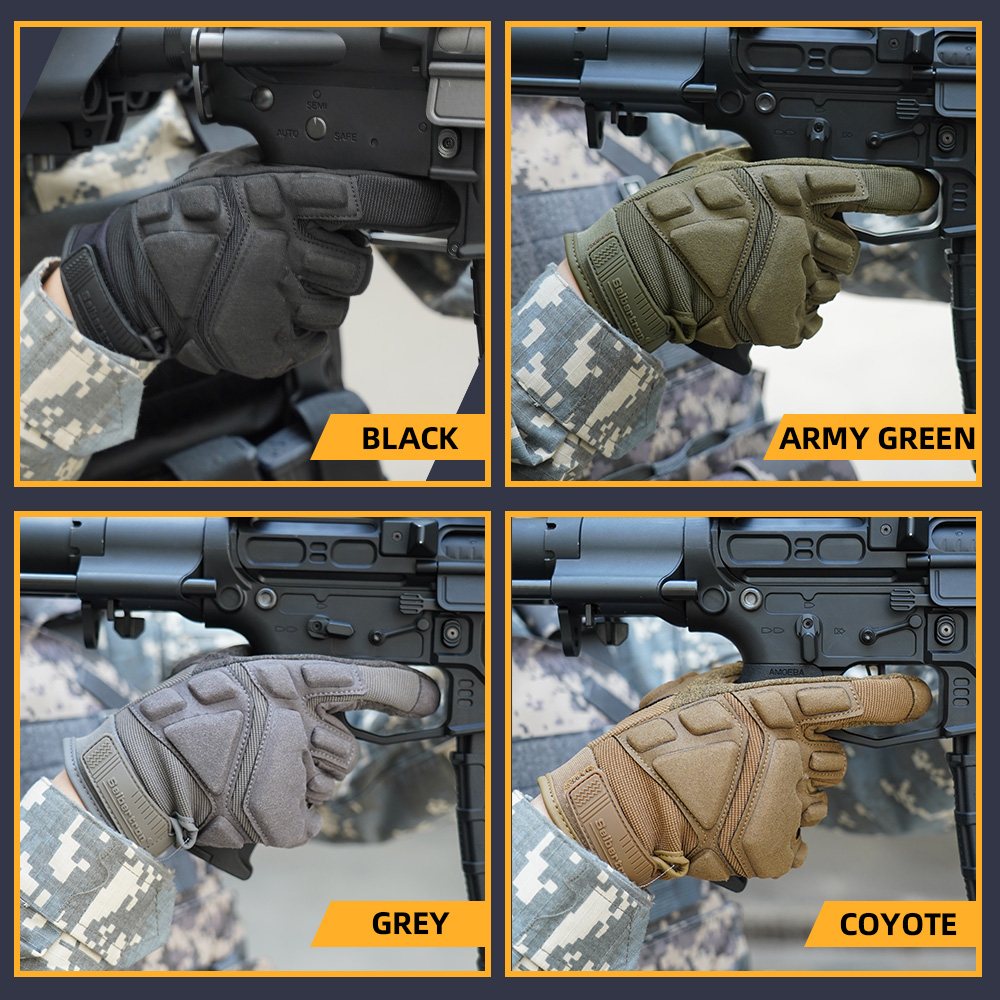
The Seibertron S.O.L.A.G 2.0 full-finger glove listing describes a mesh back, palm perforations, Super Grip palm placement and a TPR hook-and-loop wrist closure. Those are useful details to compare if you want covered fingertips and an adjustable fit.
For the broader choice of styles, visit the Seibertron tactical glove collection. Check the current details and size chart for each model.
Frequently asked questions
Are half-finger gloves always better for summer?
No. Finger coverage is only one factor. Consider the rest of the construction, the weather and the surfaces your hands will contact.
Does full-finger coverage mean cut resistance?
No. Coverage and a tested cut-resistance rating are different things. Check the documentation for the exact model.
Can I use tactical gloves as motorcycle gloves?
Do not assume the categories are interchangeable. For riding, compare gloves intended for motorcycling and check their stated protection standards and fit.